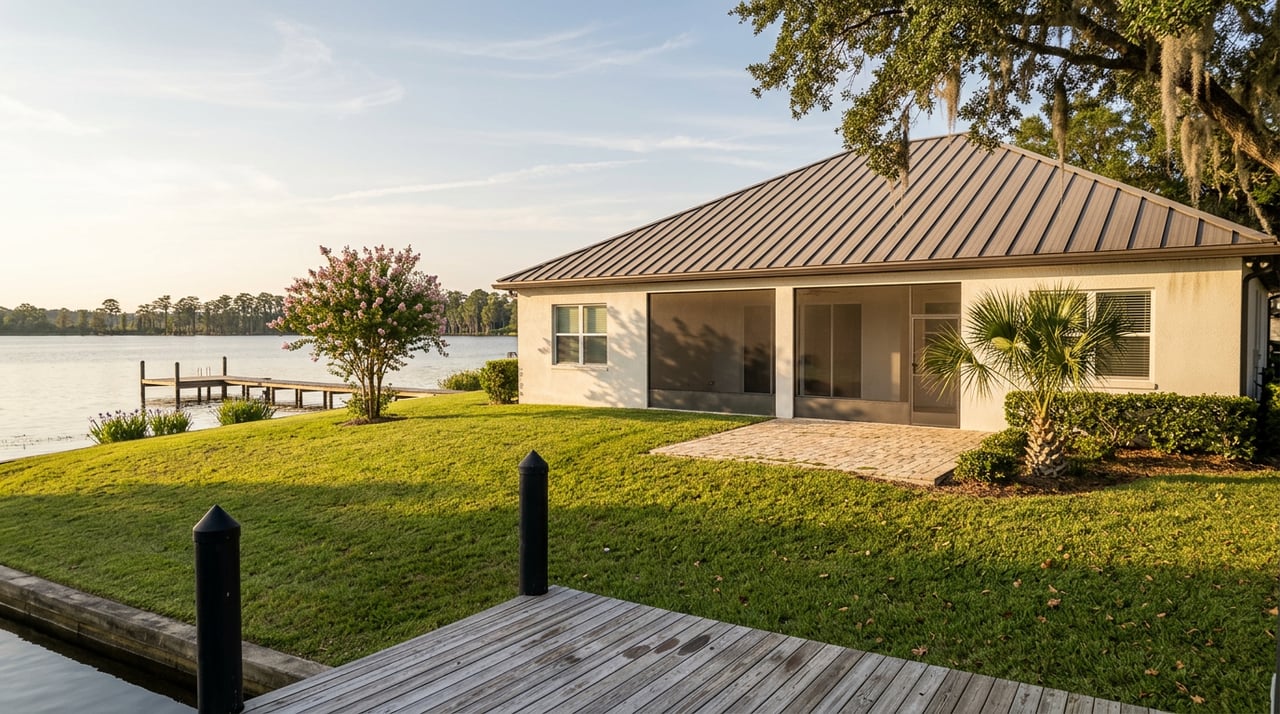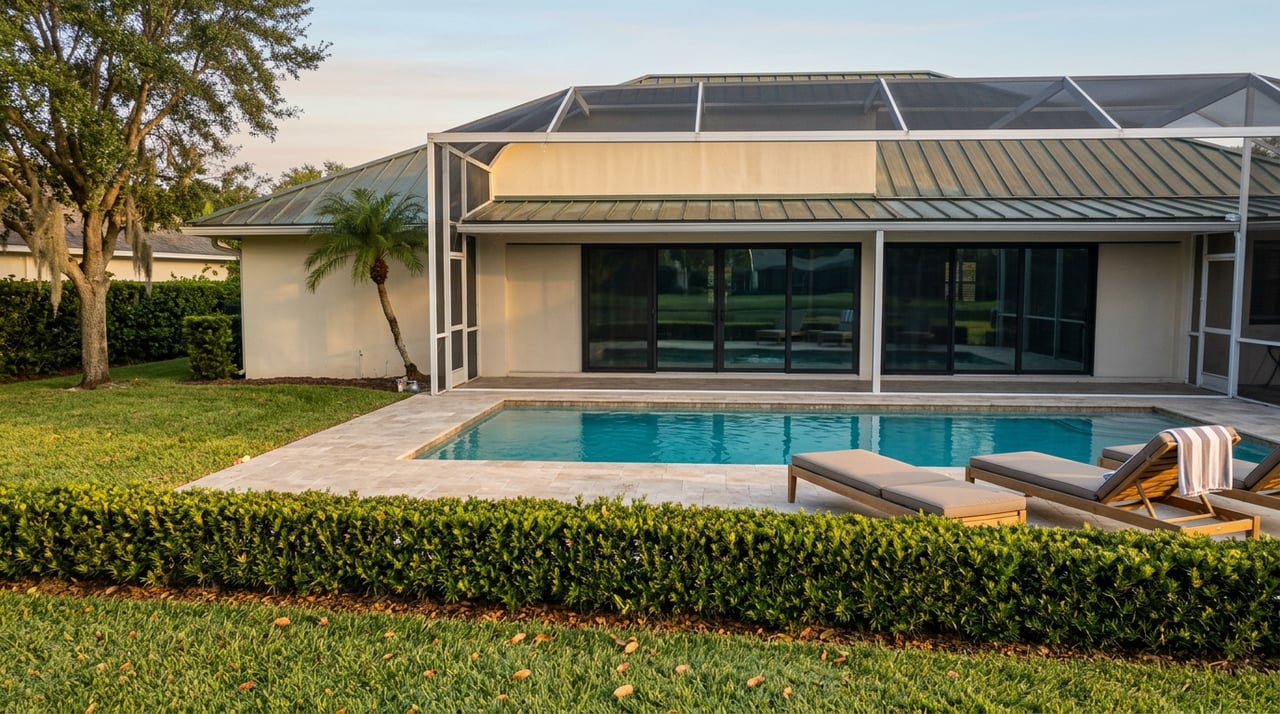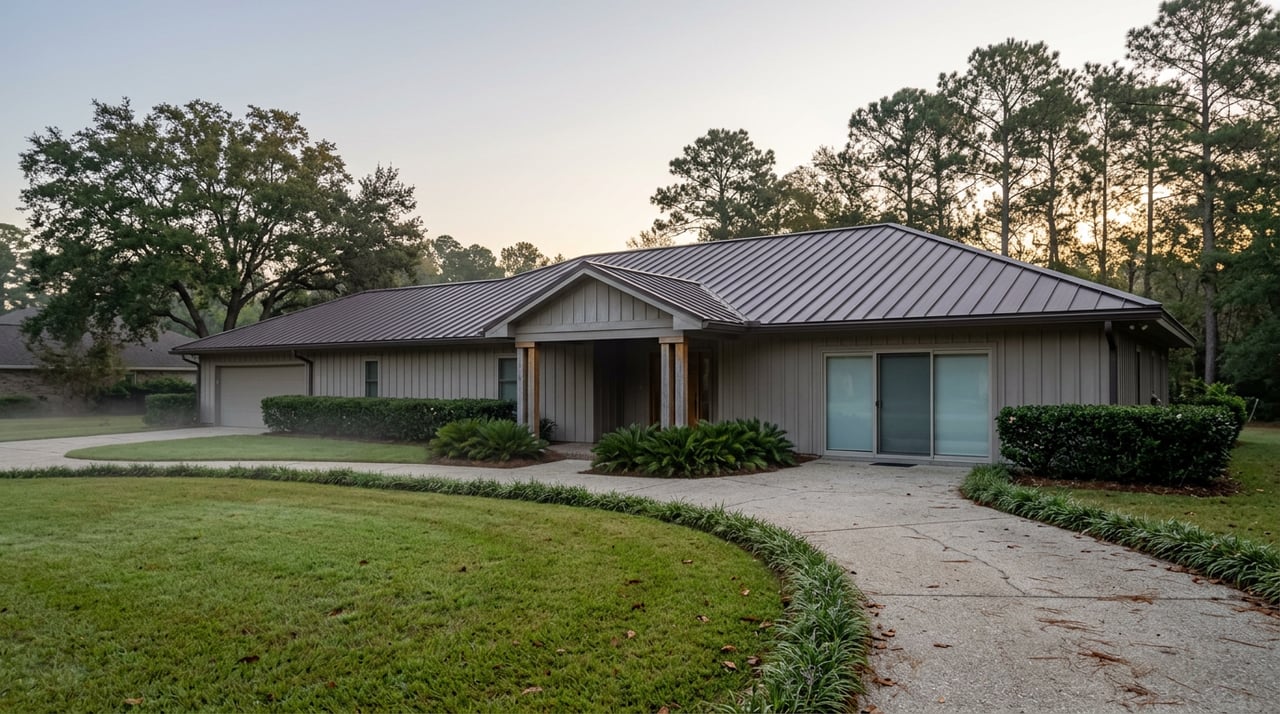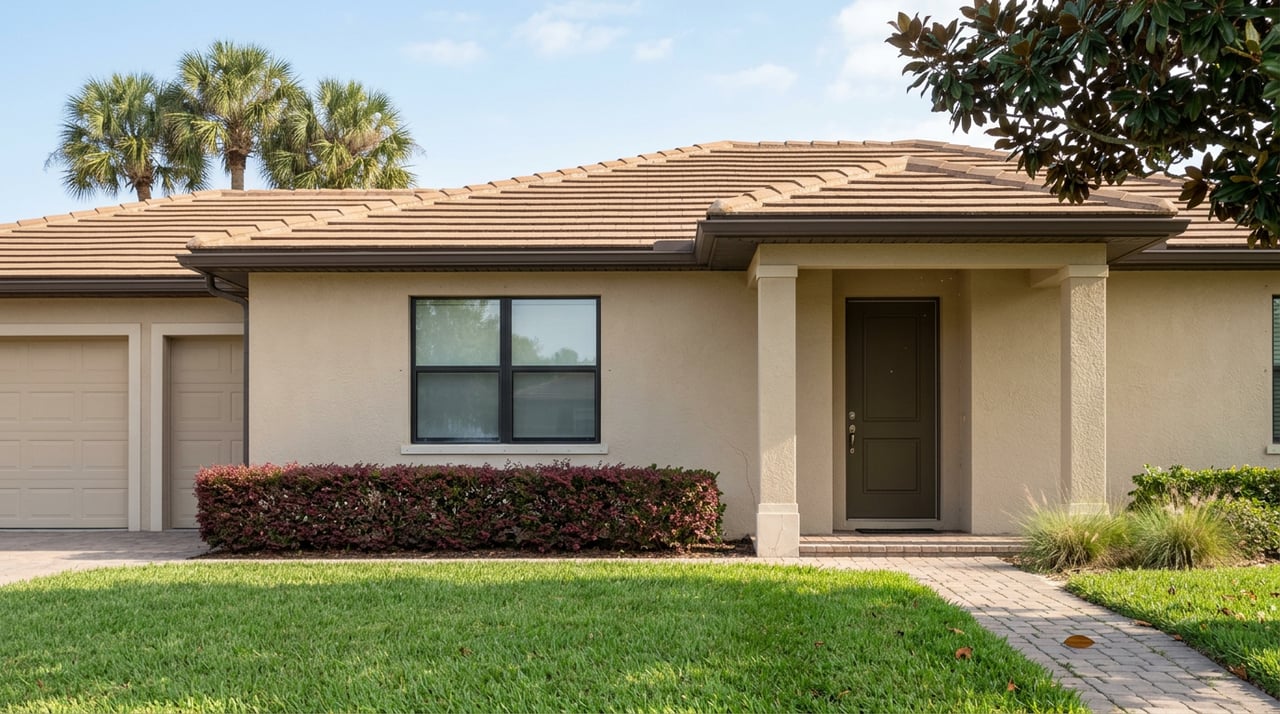
Picture two lots for sale the same week in Rainbow Lakes Estates. Both are just under an acre. Both sit inside the same platted subdivision, a few streets apart. Both list for close to $25,000, in line with recent land sales in the area. One buyer closes in three weeks and starts clearing for a foundation. The other spends the next six months discovering that the road to the lot isn't county-maintained, that the temporary utility pole on site has never been activated, and that getting power run to the property will cost more than the land did.
Nothing on either listing warned them which lot they were getting. Both said "no HOA."
That phrase does a lot of work in Rainbow Lakes Estates marketing, and it hides more than it reveals. If you're comparing this community to others in Marion or Citrus County, the thing that actually determines what you're buying isn't the acreage or the price. It's four variables that never show up in the headline number: whether the road is paved, whether the lot has a functioning well and septic path, whether you're dealing with the county's Municipal Services District or a separate voluntary association, and whether the parcel carries a lien nobody's mentioned yet.
"No HOA" Is Technically True and Also Misleading
Rainbow Lakes Estates really doesn't have a traditional homeowners association with mandatory dues and an architectural review board. What it has instead is older, bigger, and harder to opt out of: a government taxing district created by an act of the Florida Legislature in 1969, covering over 11,000 lots. This is the Rainbow Lakes Estates Municipal Services District, and Marion County runs it directly.
The MSD isn't a marketing add-on. It funds and staffs the things a normal HOA would handle in a planned community: general government functions such as recordkeeping and administrative support, plus maintenance of roughly 175 miles of roadway, right-of-way mowing, and upkeep of public grounds and facilities. Every parcel gets assessed for it. As of the county's current published rate, that's a $35 per-parcel assessment, a 2.25 millage rate, and a separate .47 recreation millage. It shows up on your county tax bill, not as a line item from a management company, which is exactly why so many listings can honestly say "no HOA" while the buyer still owes money to a governing body every year.
A separate, genuinely optional Property Owners Association also exists for some residents. This one behaves the way a normal HOA would: membership is voluntary, and buyers are told to confirm the current fee directly with the association. Two organizations, two different obligations, and listing agents don't always distinguish between them.
Same Subdivision, Two Different Products: Paved vs. Unpaved
The MSD's road program is where the paved-versus-unpaved split actually comes from. Marion County resurfaces and rebuilds roads inside Rainbow Lakes Estates on a rolling schedule, completing approximately four miles of roads every two years across a district with 11,000-plus lots. Do the math and you'll see why some streets have been paved for decades and others are still waiting.
That's not a cosmetic difference. Lots marketed as sitting on "a quiet paved road" are treated as build-ready, sometimes with power already staged nearby. Lots on unpaved sections still get listed and sold at similar prices per acre, but the buyer inherits the timeline uncertainty and, in some cases, the cost of getting a driveway permit approved for an unimproved road. If you're comparing two nearly identical-looking parcels in this community, road status is the first thing to ask about, not the acreage.
Well, Septic, and the Zoning Rule That Started a Cross-County Fight
There's no county water or sewer running to most of Rainbow Lakes Estates. Well and septic are the default utility setup for both existing homes and vacant lots, which listing after listing confirms outright, often noting that power is available nearby but water and wastewater are the buyer's responsibility to install.
The zoning underneath all of it is R-1, site-built only. That single rule became the subject of a real dispute in 2023, when Levy County commissioners considered allowing mobile homes on their side of the subdivision, which straddles the Marion-Levy county line. Marion County's zoning already prohibited it. Homeowners on the Levy County side turned out in force against the idea, and the commission ultimately voted to draft an ordinance banning mobile homes there too, matching Marion County's rules rather than leaving one subdivision split under two different standards, according to a local report on the meeting. If you're land shopping here specifically because you assumed a rural, unrestricted parcel might allow a manufactured home as a lower-cost path to ownership, that door is closed on both sides of the county line.
What the Median Actually Contains Right Now
Here's where the blended nature of this market shows up most clearly. The most recent full-month sold data available, from January 2026, put the home median at $285,000, up 16.4% year over year, with homes taking an average of 33 days on market compared to 24 days the year before. On the surface, that reads like a normal, mildly cooling residential market.
Look at land specifically, though, and a different price sits right next to it. As of late May 2026, the median listing price across active land parcels in the district was $245,000, a figure pulled upward by a small number of large-acreage and waterfront tracts sitting alongside hundreds of quarter-acre and half-acre lots priced in the twenty-thousand-dollar range. Current listing counts show why the blend is so wide: roughly 125 single-family homes for sale averaging around $274,000 in list price alongside more than 250 vacant lots averaging closer to $26,500. Those two categories don't behave like the same asset, yet they get folded into the same "Rainbow Lakes Estates" price conversation. It's part of why the community's average annual property tax bill lands around $521, a figure that would be absurdly low for an owner-occupied home at $285,000 but makes sense once you remember how many of the parcels behind that average are undeveloped, minimally assessed lots rather than finished houses.
The practical takeaway: when someone quotes you a median or average price for this community, ask whether they mean built homes, raw land, or both blended together. The answer changes what you should expect to pay for a comparable property by a wide margin.
Before You Write an Offer, Confirm These Five Things
- Road status. Paved or unpaved, and is it county-maintained.
- Utility path. Confirm well and septic are feasible on the specific parcel, and whether electric service is active or just staged nearby.
- MSD standing. Ask whether the county assessment and any road-related charges are current, since these ride with the property through the tax bill.
- POA membership. If a voluntary association is mentioned, confirm the fee and what it actually covers, separate from the mandatory MSD assessment.
- Title and liens. Some vacant lots in this subdivision have surfaced with IRS liens or unresolved county assessments that must be cleared at closing. A title search on raw land here isn't optional paperwork, it's the difference between owning the parcel outright and inheriting someone else's debt.
None of this means Rainbow Lakes Estates is a risky place to buy. Plenty of buyers get exactly what they want here: an acre of land, a paved road, well and septic already sorted, and a real government structure quietly keeping roads maintained without a homeowners association telling them what color to paint the shed. The point is that the price alone won't tell you which version of the community you're getting. The road, the utilities, and the paperwork will.
Common Questions About Buying in Rainbow Lakes Estates
Is there really no HOA in Rainbow Lakes Estates? There's no mandatory homeowners association with dues in the traditional sense. There is a mandatory government body, the Rainbow Lakes Estates Municipal Services District, which assesses every parcel for roads and recreation facilities. A separate, voluntary Property Owners Association also exists for residents who choose to join.
Can I place a mobile home on a lot here? No. Zoning throughout Rainbow Lakes Estates, on both the Marion County and Levy County sides, requires site-built construction under R-1 rules. This was reaffirmed through a formal zoning process in 2023.
Do I need to drill a well and install a septic system? On most parcels, yes. County water and sewer generally aren't available, and well and septic are the standard setup for both existing homes and vacant land in the district.
How often do roads in the community get resurfaced? Marion County's Road Construction fund for the district completes roughly four miles of resurfacing every two years across an area with more than 11,000 platted lots, which is why paved and unpaved sections can exist just streets apart.
If you're weighing a lot or a home in Rainbow Lakes Estates against something in Dunnellon, Citrus Springs, or elsewhere in Marion County, I'd rather walk you through what a specific parcel actually includes before you make an offer than let a listing description do the explaining. Reach out to Kelly Lafave and let's connect.