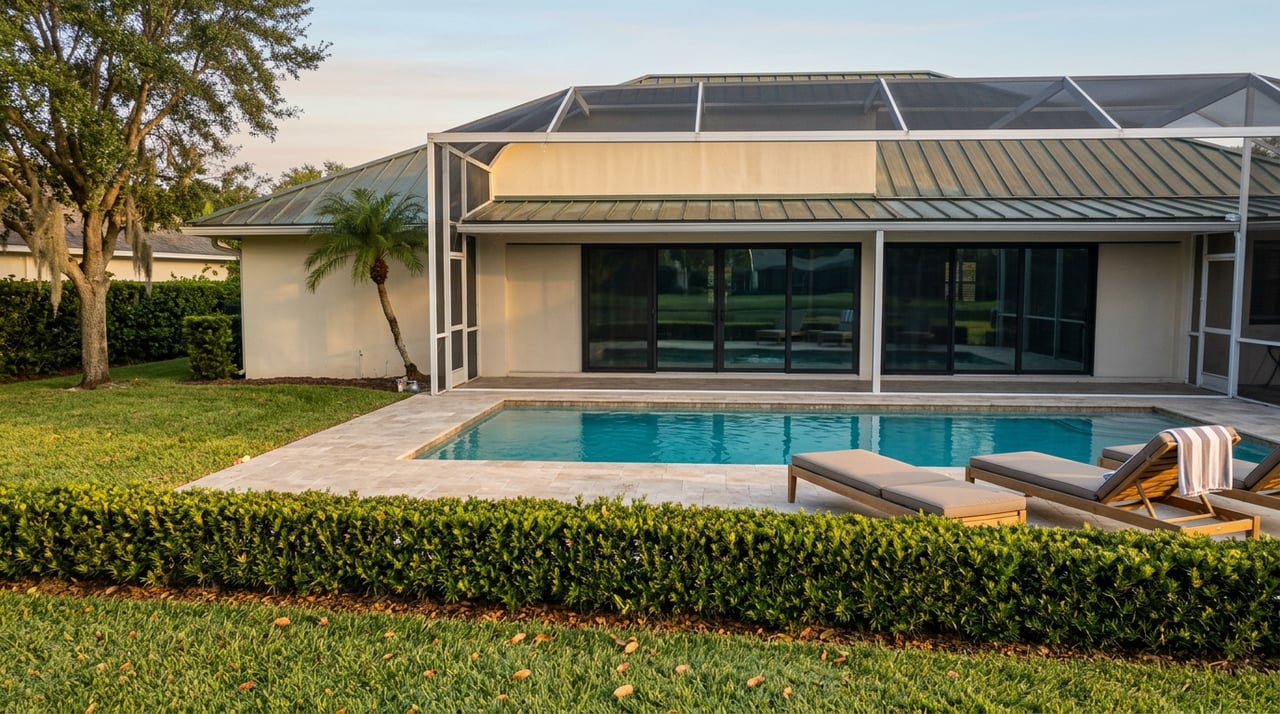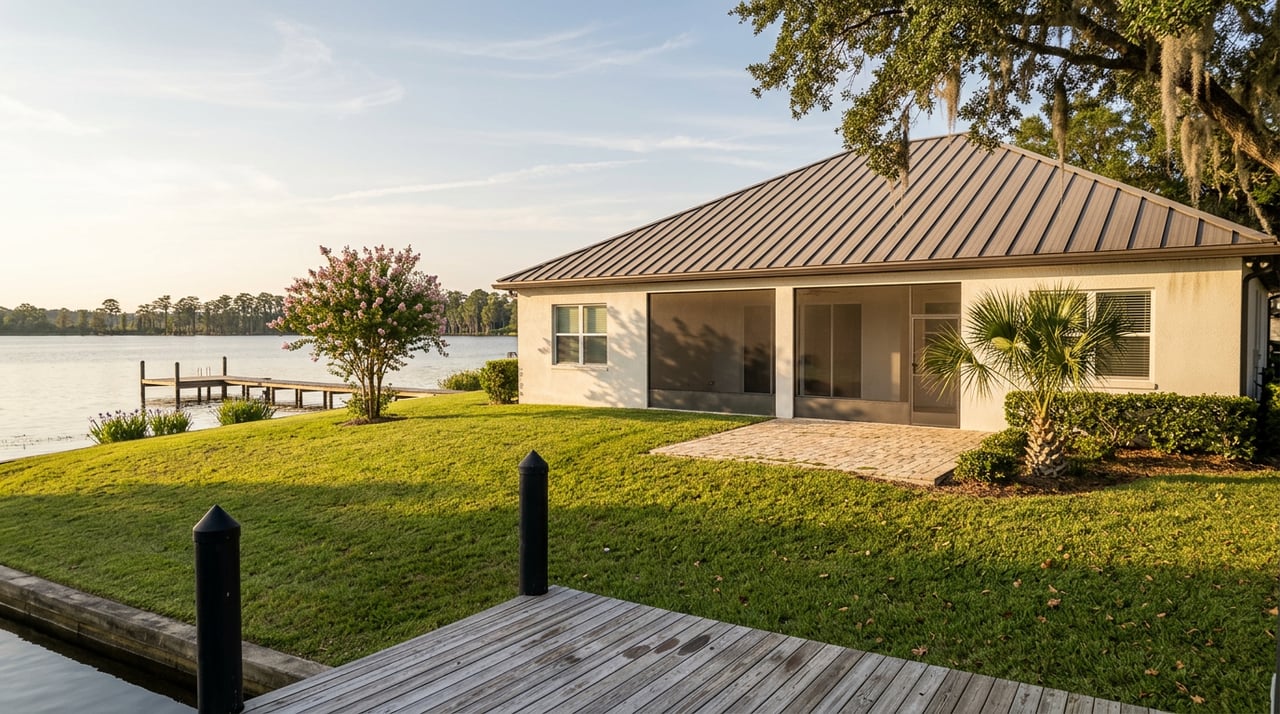
I once showed two "waterfront" listings in Inverness on the same Saturday afternoon. The first had a private dock with enough water under it to launch a bass boat without a second thought. The second, a half mile away as the crow flies, had a dock too, but the water beneath it was low enough that my buyer could see the mud. Both listings used the same word. Both had roughly comparable price tags. Neither the listing description nor the asking price told my client which one they were walking into.
That gap is not a fluke of one dry season or one unlucky lot. It is built into how the lake system around Inverness actually works, and it is worth understanding before you fall for a photo of glassy water on a listing sheet.
Three Lakes Wearing One Name
Most buyers who search "Inverness waterfront" picture one lake. What they are actually looking at is the Tsala Apopka Chain, a roughly 23,300 acre freshwater system that Citrus County's own Aquatic Services office describes as three separate, segregated bodies of water: the Floral City Pool at about 9,100 acres, the Inverness Pool at about 8,000 acres, and the Hernando Pool at about 6,200 acres. These pools were not always distinct. Before flood control efforts, road construction, and farming reshaped the region starting in the 1880s, Tsala Apopka was a free-flowing chain. Today each pool is managed on its own, with its own water levels, its own inflow, and its own set of rules about how full it stays.
That distinction matters more than most listings let on. A home on a canal off the Inverness Pool and a home on a canal off the Hernando Pool can both say "direct access to the Tsala Apopka Chain" in the same sentence, while behaving like two different lakes when it comes to how much water is reliably there.
The Gates That Decide How Much Water Reaches Your Dock
The three pools stay separate because of physical structures the Southwest Florida Water Management District operates between them. The district's own fact sheet on Citrus County water control structures names several: the Golf Course Structure, located on East Sandpiper Drive inside the Inverness Golf & Country Club, which helps manage flow between the Floral City and Inverness Pools. The Moccasin Slough structure, east of Inverness, which does similar work between those same two pools. The Van Ness structure, at the northern end of the Hernando Pool, which handles outfall from Two Mile Prairie.
These are not decorative. In 2023, the district rebuilt the Golf Course Structure after receiving public feedback and modeling flow through the canal as part of its Withlacoochee River Watershed Initiative. The old design used four steel drop gates that water had to spill over to pass through. The rebuild swapped those for two wider aluminum gates that raise up, letting water move underneath instead of only over the top, cutting down on debris blockages and maintenance. That single engineering choice changes how quickly water moves between the Floral City and Inverness Pools during wet and dry stretches alike, which in turn changes what a homeowner on either side of that structure experiences at their own dock.
None of this shows up in a property listing. It shows up in whether your boat lift still clears the bottom in April.
What "Below Normal" Looked Like This Spring
Here is where the mechanism stops being background trivia and starts being something a buyer should ask about directly.
The water management district posts regular Withlacoochee River System updates, and the two most recent ones I have seen tell a consistent story. As of early March 2026, the district reported that water control structures throughout the chain remained open to bring in whatever river water was available, but that the inflow was so minor the effect was negligible, with all three pools receiving an equal but small trickle and no water leaving the system. By April 1, 2026, the update was more specific: water levels had dropped another four inches over the prior month and were sitting roughly three feet below desirable levels, with all three pools running about two feet lower than they had been at the same point the year before.
That is not a one-lake problem. It is a chain-wide condition that touched the Floral City, Inverness, and Hernando Pools together, and it means a dock that photographed beautifully in a listing taken during a wetter month may show a very different waterline by the time you tour it in person. A buyer relying on last year's photos, or on a neighbor's description of "always plenty of water," is relying on a snapshot the lake system itself does not guarantee will repeat. Ask for the district's most current update before you tour, since these figures move month to month and the spring 2026 numbers are a data point, not a permanent condition.
The Price Tag Doesn't Know Which Pool You're In
This is the part that actually costs people money.
I have watched "waterfront" listings around Inverness span an enormous range, from a two-bedroom mobile home on a canal with water on two sides listed near $125,000, up through multi-acre lake estates with private docks and boathouses priced well past $750,000. That spread makes sense on its face: square footage, acreage, and finish level all move price the way they do everywhere. What the spread does not reflect is which pool a property sits on, whether it borders open water or a narrower canal prone to vegetation buildup, or whether its dock depth held up during this spring's low-water stretch.
Two homes can carry nearly identical price tags while one sits on a pool with a reliable connection to the main chain and the other sits behind a control structure that only passes water when the district decides conditions call for it. The market, at the portal level, treats "waterfront" as a single checkbox. The lake system does not.
What to Ask Before You Write an Offer
A few questions turn this from an abstract risk into something you can actually check before you are under contract.
- Which pool is the property on: Floral City, Inverness, or Hernando? The answer changes which control structures govern your water level.
- Is the frontage on open lake water or a canal? Canals are more exposed to the vegetation and depth issues that come with segregated pools.
- What did the dock or lift look like during this spring's lower water period, not just in last year's listing photos?
- Is the boat access private, or shared through an HOA-managed ramp, as in communities like Pritchard Island or the Moorings at Point O' Woods? Shared access can mean shared maintenance costs when water levels affect ramps.
- Has the seller mentioned any recent lake-level notices from the water management district, and can you find the current one yourself before you tour?
None of these questions require a hydrology degree. They require asking a direct question and getting a direct answer, which is exactly the kind of groundwork worth doing before you commit to a property that happens to sit on the wrong side of a gate during a dry year.
If you want to see the water for yourself before you decide anything, Fort Cooper State Park and the downtown parks along the Inverness Pool, including Wallace Brooks Park and Liberty Park, give you a way to look at current conditions in person rather than trusting a photo taken who knows when.
A Few Direct Answers
Does low water this year mean the lake is permanently shrinking? No. The district's updates describe this as a seasonal and rainfall-driven condition, tracked and reported regularly rather than treated as a fixed decline. But "seasonal" still means real variation from year to year, and a buyer should confirm current conditions rather than assume last year's water level.
Is every waterfront home in Inverness in a flood zone? Not automatically. Flood zone status is determined parcel by parcel through FEMA mapping, not by pool membership. It is worth checking independently for any specific address you are considering, alongside the water access questions above.
Does the pool a home sits on affect insurance or financing? Not directly through the pool designation itself, but dock condition, flood zone status, and property age all factor into both, so it is worth having those conversations with your lender and insurer before you get deep into a contract.
Waterfront living around Inverness is still one of the more genuinely appealing reasons to move to this part of Florida, and plenty of homes on this chain deliver exactly what their photos promise. The point is not to be wary of the word. It is to ask which lake is actually behind it, because as recently as this spring all three pools were running below where they sat a year before, and that kind of gap can close or widen by the time you tour.
If you are comparing waterfront listings around Inverness and want someone who will walk the pool question through with you before you write an offer, Kelly Lafave works directly with buyers from the first conversation through closing, across Marion, Lake, Sumter, and Citrus counties. Let's Connect.