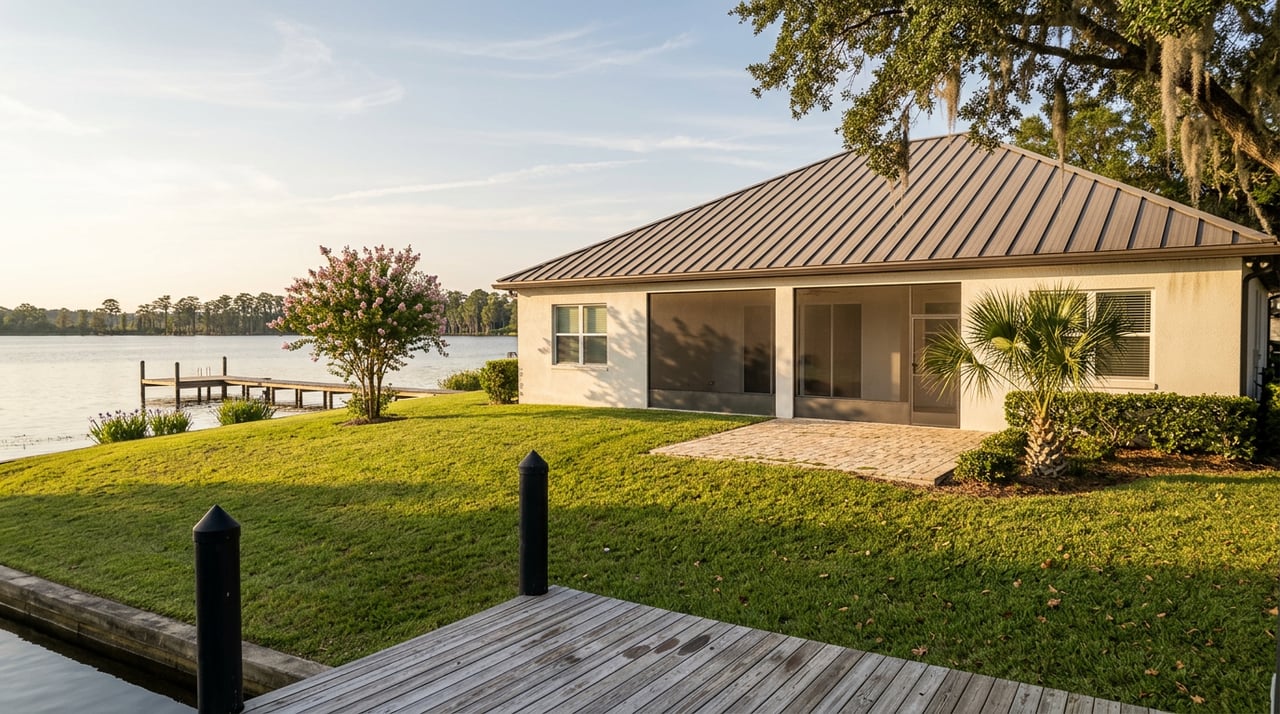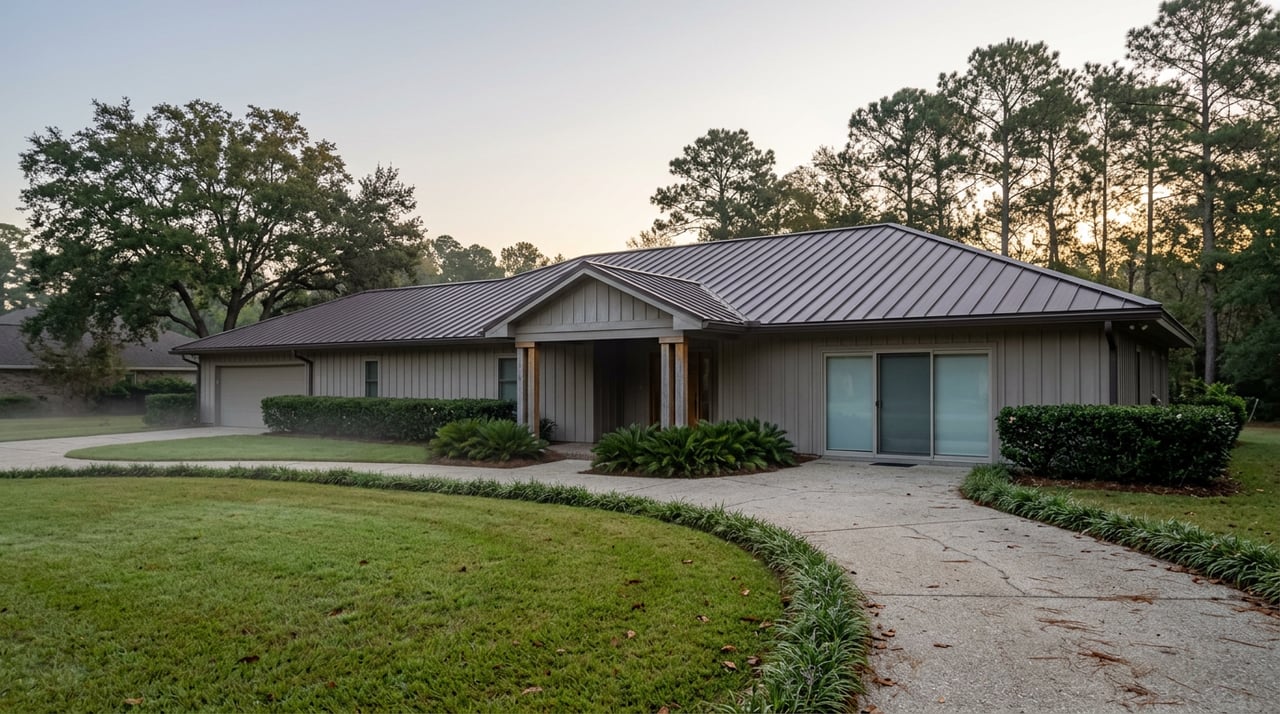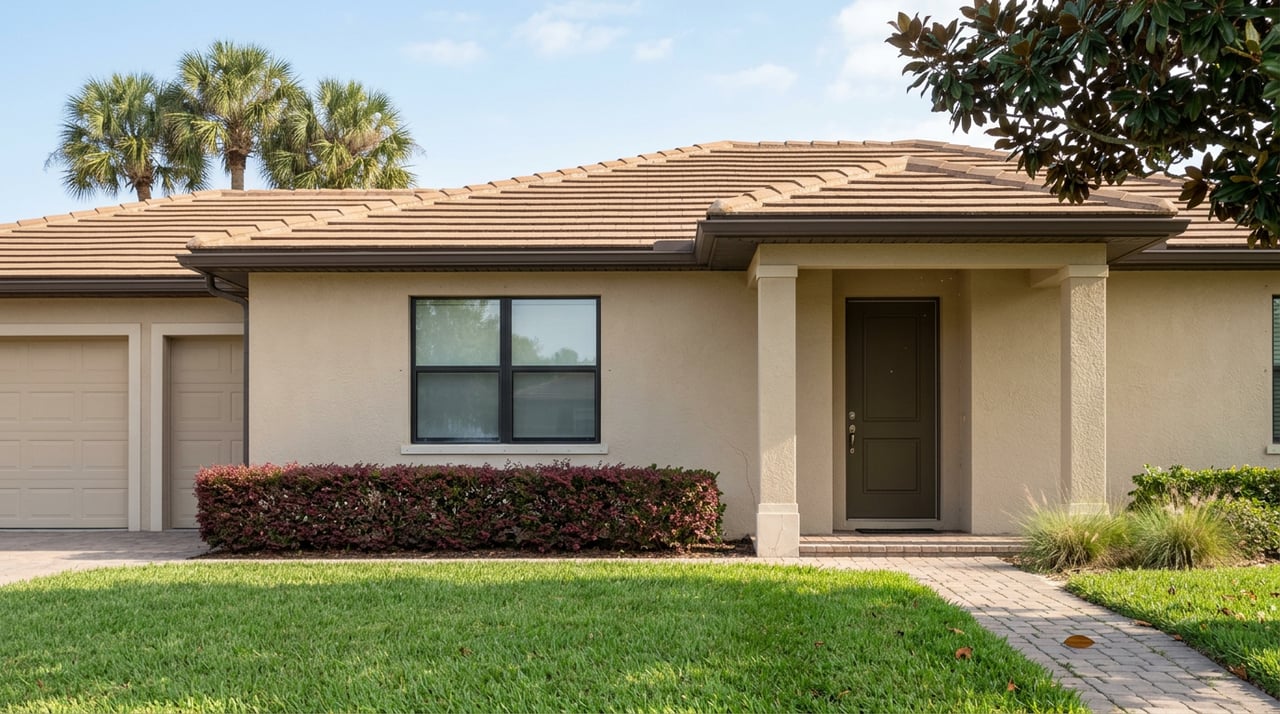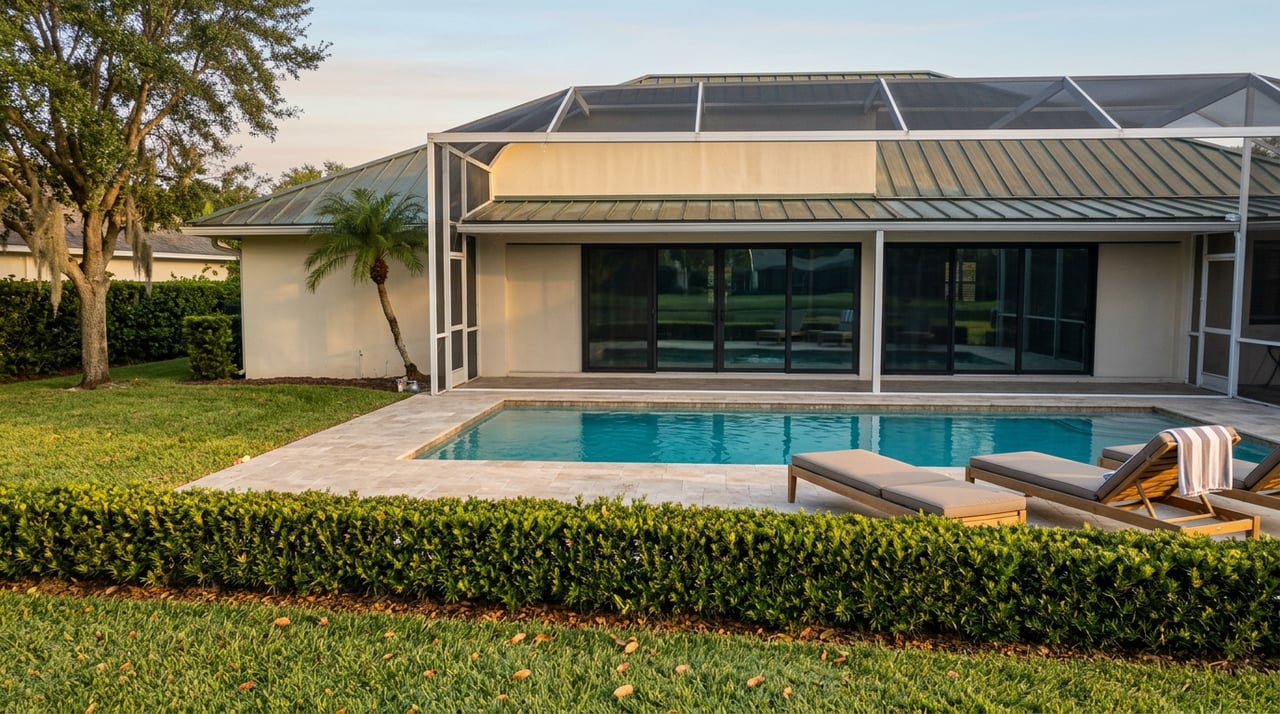
Search "Spruce Creek homes for sale" in Summerfield and two communities come up side by side. One is Del Webb Spruce Creek Golf & Country Club, a gated 3,250-home neighborhood with 36 holes of pay-to-play golf and a restaurant called Toppers Tavern inside the gates. The other is Spruce Creek South, a smaller gated 55-plus community a short drive away with its own golf course, its own restaurant called The Links, and lots that run noticeably bigger than its Del Webb neighbor's.
Same name on the sign. Different price tag on the house.
That naming overlap is a small, specific piece of a larger problem I keep running into with buyers who've already looked at Summerfield on a portal and come away with a single number in their head. The town-wide median tells you almost nothing about what you'd actually pay for a house in any one of Summerfield's real sub-markets, and right now that median is doing something that looks like a warning sign but isn't one.
The Number Everyone's Watching, and Why It's Misleading
As of July 2026, Summerfield's median list price sat around $295,000, down roughly 6% from a year earlier, with price per square foot down about 3% over the same stretch. Zillow's tracker for the same window showed average home value near $297,800, off about 2.8% year over year, with homes going pending in roughly two months. A third tracker, pulling Zillow and Realtor.com data as of early August 2026, put typical value closer to $288,000 and noted that about 27% of active listings had taken a price cut.
Three different trackers, three slightly different numbers, but they all point the same direction: the blended average for Summerfield has softened over the past year. If you stop there, the story looks like a town cooling off.
Here's what that blended number doesn't tell you: what's actually selling underneath it.
What's Actually Pulling the Average Down
D.R. Horton has an active new-construction community called Sunset Hills off Highway 441, a short drive from Carney Island Recreation and Conservation Area and Eaton's Beach Sandbar & Grill on Lake Weir. Through 2026, homes there have listed anywhere from the high $200,000s into the mid $300,000s, concrete block construction, 1,328 to 2,605 square feet, with an HOA fee of $69 a month. That's meaningfully below the town's blended average of roughly $298,000, and it's new inventory hitting the market in real volume as the community sells through its phases.
When a builder adds dozens of homes priced under the town average into the same MLS pool used to calculate that average, the average moves down even if not a single existing home lost a dollar of value. That's a composition effect, not a value decline. The homes already standing in Summerfield's older neighborhoods and 55-plus communities aren't necessarily worth less this year than last. The mix of what's for sale has shifted toward a cheaper new-construction product, and the town-wide median is doing exactly what medians do when the underlying mix changes: it moves without anyone's equity actually moving with it.
This matters for two different readers in two different ways. If you're comparing Summerfield to another town using the headline median, you're comparing a number that includes brand-new $260,000 starter homes against whatever mix that other town happens to have. If you already own in one of Summerfield's established 55-plus communities, a falling town median is not evidence your specific house is worth less. It's evidence that more affordable new construction is now part of the denominator.
Three Markets, One ZIP Code
Summerfield isn't a single housing market wearing one median. It's at least three, and they don't compete with each other for the same buyer.
New construction. Sunset Hills and similar builder communities sell to buyers who want a warranty, a fixed closing timeline, and a modest HOA. Lot sizes are standard suburban, HOA fees stay low because there's no golf course or clubhouse to fund, and pricing tracks the builder's phase release, not the resale market next door.
Gated 55-plus golf communities. This is where the Spruce Creek naming trap lives. Del Webb Spruce Creek Golf & Country Club runs an average of roughly $211 per square foot, carries a monthly HOA around $211, and importantly reports no CDD and no bond, a detail worth confirming on any specific listing's tax bill before you assume it applies to yours. A snapshot of current inventory there showed 131 single-family homes listed at an average price of about $337,800, sizes ranging from 943 to 3,179 square feet.
Spruce Creek South, a few minutes away, runs cooler: average price per square foot near $175, a median list price around $236,000 in a July 2026 snapshot of active listings, and quarter-acre-plus lots that are noticeably bigger than what Del Webb offers on comparable homes. Resales there have ranged roughly from $150,000 to $350,000. Both communities are age-restricted, both have golf, both have an on-site restaurant, and a buyer who assumes "Spruce Creek" means one price range is going to be surprised by a nearly $40-per-square-foot gap between the two.
Horse country and acreage. Summerfield still has a rural edge, rezoned parcels of several acres with no HOA at all, some carrying existing paddocks or barns, marketed to buyers who want land rather than a subdivision. These lots don't show up in any per-square-foot comparison because they're not competing on square footage. They're competing on acreage, road access, and whether the land is already cleared.
Three tiers, three different cost structures, three different buyers. None of them move in lockstep, which is exactly why a single median flattens all of them into one number that describes none of them precisely.
Reading a Summerfield Listing the Right Way
Before you anchor on a price, confirm which of Summerfield's three markets you're actually looking at.
- Check the community name specifically, not just "Summerfield." Del Webb Spruce Creek Golf & Country Club and Spruce Creek South are not interchangeable, and a listing agent search that returns both under one search term can bury the distinction.
- Ask whether the community carries a CDD or bond, and get that answer in writing rather than assuming a neighboring community's structure applies. Del Webb Spruce Creek's no-CDD status doesn't automatically extend to every gated community nearby.
- Compare price per square foot within the sub-community, not against the town median. A $295,000 townwide median is close to meaningless if the home you're evaluating sits in a $175-per-square-foot resale pool or a $211-per-square-foot one.
- For new construction, ask what phase the community is in. Early-phase pricing and later-phase pricing in the same builder community can differ by tens of thousands of dollars as lots fill in and incentives shift.
- For acreage, confirm zoning and any restrictions on outbuildings or livestock before you fall in love with the lot size alone.
None of this is complicated once you know to ask it. The friction shows up when a buyer compares two listings that look similar on paper, one from each Spruce Creek, and can't figure out why the numbers don't line up. The answer is that they were never the same product to begin with.
A Few Direct Answers
Is Summerfield part of The Villages? No. Summerfield is its own community in Marion County, sitting just north of The Villages. Several of its 55-plus communities market their proximity to The Villages' amenities, but they operate under their own HOAs and, in most cases, their own separate fee structures.
Do all of Summerfield's 55-plus communities have golf? The major ones do. Del Webb Spruce Creek Golf & Country Club and Spruce Creek South both include golf as part of the amenity package, along with clubhouses and on-site dining. That's part of why HOA fees in those communities run higher than a standard suburban HOA that isn't funding a golf course.
Why do some Summerfield listings advertise "no CDD" as a selling point? A Community Development District bond adds a separate assessment on top of property taxes, often for years, to pay off infrastructure the developer financed upfront. Communities without one, like Del Webb Spruce Creek and, by most current reporting, Spruce Creek South, carry lower all-in monthly costs than comparable communities that do. It's worth confirming on the actual tax bill rather than assuming based on a nearby community's status.
Summerfield rewards buyers who ask which market they're in before they ask what the market is doing. If you're trying to figure out where your budget actually lands, whether that's new construction off 441, a golf-course resale, or acreage on the town's edge, I'd rather walk you through the real comparables than let a blended median make the decision for you. Reach out to Kelly Lafave and let's talk through which Summerfield fits what you're actually looking for.